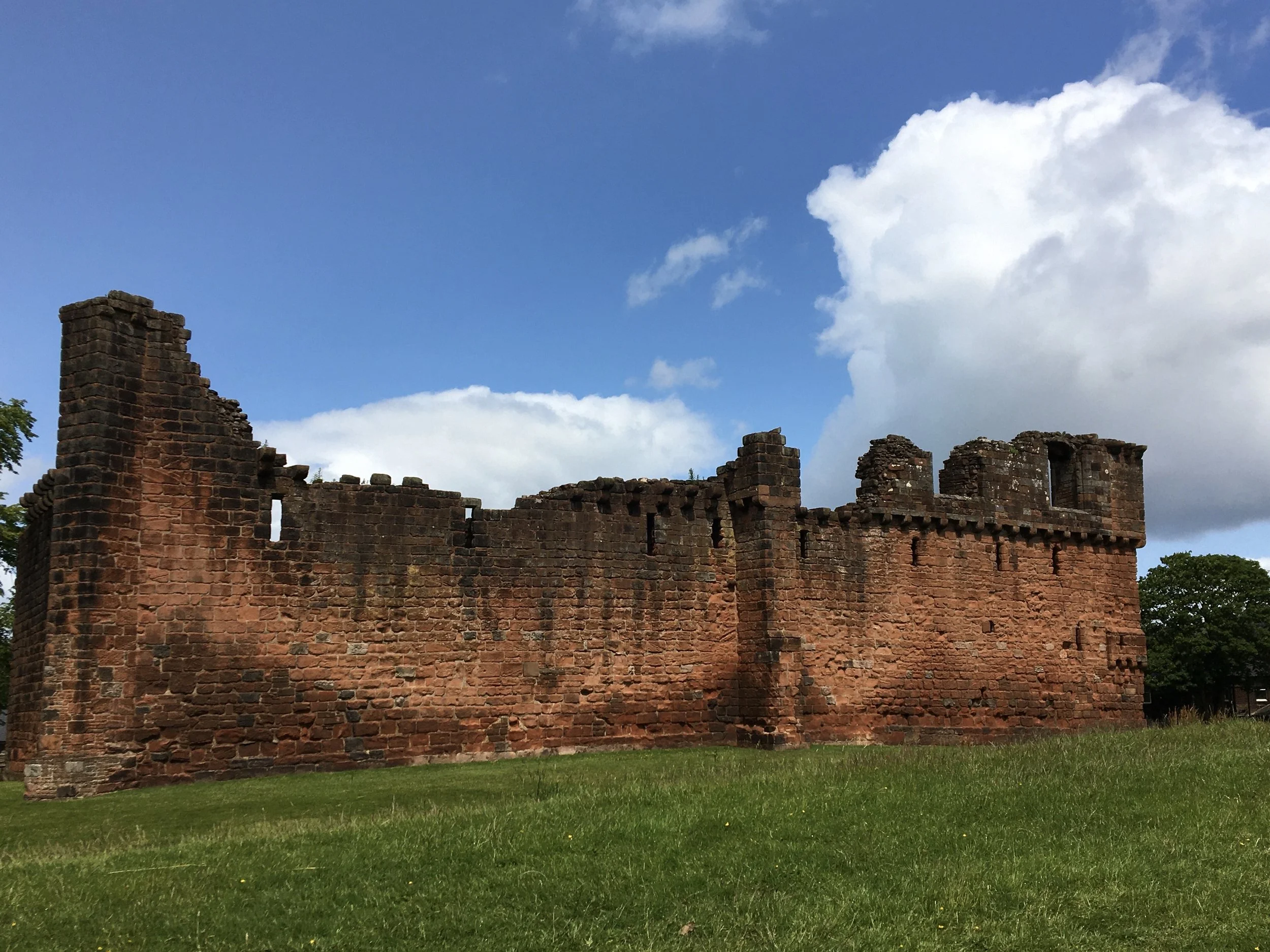
This guide tells the story of England through the streets, buildings and places of Penrith and the surrounding area. Each chapter explores an important development in England’s history, how Penrith reflected and sometimes played a part in that history, and the places that bring this to life.
If you enjoy this guide, please consider making a donation of £3, or whatever you can, to 4Eden, a charity supporting people with learning disabilities and additional learning needs in Penrith.
This is an accessible public-history guide rather than an academic paper. It draws on the sources listed at the end, together with my own knowledge and research. If you spot an error or have a suggestion for improvement, I’d be delighted to hear from you via the Contact page.
1. Prehistoric Britain: Farming and Monuments (c. 4000 BC–AD 43)
The market town of Penrith that we recognise today began to develop during the 12th century, but people had lived, travelled and gathered in the surrounding area for thousands of years before then. Its position in the Eden Valley, close to routes running north–south and east–west, seems to have made the area an important meeting place from an early date. The name Penrith probably derives from the Brittonic language once spoken in this part of Britain, although whether it meant “chief ford” or “red hill” remains debated.
During the Neolithic period (c. 4000–2500 BC), farming spread across Britain, communities became more settled and people began constructing great monuments. The Bronze Age (c. 2500–800 BC), named for the growing use of bronze tools and weapons, followed. The Iron Age (c. 800 BC–AD 43) saw the increasing use of iron and the development of more complex societies. These periods form part of prehistory, the time before written records, when we learn about people’s lives through archaeology.
The area around Penrith contains a concentration of prehistoric monuments.
Just near Eamont Bridge, south of Penrith, is a henge named King Arthur’s Round Table (c. 2000 BC). A henge is a prehistoric earthwork, usually circular, typically defined by a bank and an internal ditch. Despite its name, King Arthur’s Round Table predates the legendary Arthur by thousands of years.
Northeast of Penrith, near Little Salkeld, stands Long Meg and Her Daughters (c. 2400–1000 BC), one of Britain’s largest stone circles. Stone circles are arrangements of standing stones, probably used for ceremonies or gatherings. Here, dozens of stones form a great oval, with the tall red-sandstone Long Meg standing outside it. Around 3.5 metres high, she is marked with prehistoric carvings.
Where History Happened: Mayburgh Henge, Eamont Bridge
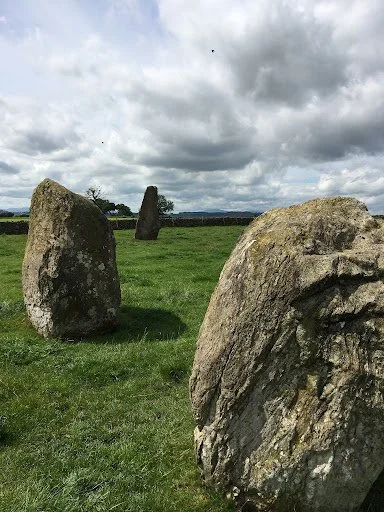
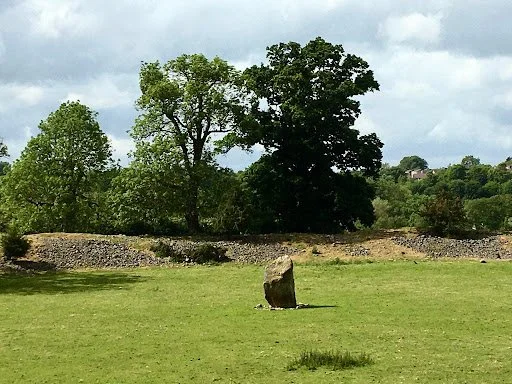
Just south of Penrith, near the meeting of the Eamont and Lowther rivers, stands Mayburgh Henge (c. 2500 BC). Its enormous circular bank was constructed from river cobbles gathered from the surrounding landscape. Today, a single standing stone, around 3 metres high, survives near its centre, although evidence suggests there were once several more.
We cannot know exactly what happened here. Mayburgh may have been used for ceremonies, gatherings, or rituals. But its scale suggests that building it required considerable communal effort.
Its location may also be significant. Mayburgh stands close to the meeting of two rivers and natural routes running north–south and east–west through the Eden Valley. The idea of this area as a crossroads — a place where people and routes meet — recurs throughout Penrith’s history.
2. Roman Britain: Conquest, Forts and the Northern Frontier (AD 43–c. 410)
In AD 43, the emperor Claudius launched the Roman conquest of Britain. Over the following decades, Roman armies pushed northwards, building forts and roads as they went. Northern Britain proved difficult to control, and from AD 122 Hadrian’s Wall became Rome’s most famous northern frontier.
What is now Penrith lay south of the Wall but firmly within this Roman military landscape. At Brougham, just south-east of the modern town, stood the Roman fort of Brocavum (1st century AD). Another fort, Voreda (1st century AD), stood at Old Penrith to the north. These forts guarded routes through the Eden Valley and connected the area to the wider military network of Roman Britain. Roman roads linked the forts with Luguvalium (modern Carlisle) to the north and with routes towards the Lake District and beyond.
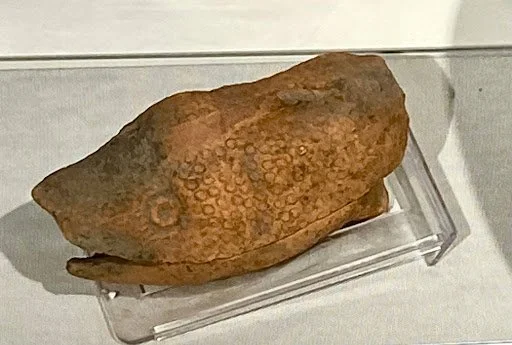
Photo: Fish-shaped Roman oil lamp, in two parts, found at Voreda (Old Penrith) Roman fort, Penrith and Eden Museum.
Where History Happened: Brocavum Roman Fort, Brougham
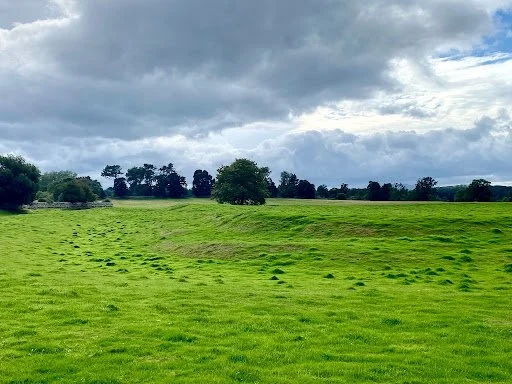
Today, Brocavum survives as earthworks, with the remains of its banks and ditches still visible in the landscape. The fort stood near the confluence of the Rivers Eamont and Lowther, where several Roman roads met. Its position illustrates the importance of this area as a crossroads, connecting routes through the Eden Valley with the wider Roman frontier.
The fort appears to have been occupied from the late 1st century until the end of the 4th century. Inscriptions found at and around Brocavum reveal something of its garrison. They record military units originally raised in what are now Portugal and Turkey — evidence of how this corner of Cumbria formed part of a Roman military network stretching across the Empire.
Nearby stands Brougham Castle (13th century), begun around 1214. Stone from the Roman fort was reused in its construction, including a Roman gravestone built into the ceiling of the castle's keep.
A little further away is Brougham Hall (medieval origins; largely 19th century), which we will return to in Chapter 9. Today it houses art and ceramics studios, a distillery and a lovely café in the central courtyard. Highly recommended!
3. The Making of England: Kingdoms, Christianity and Vikings (c. 410–1066)
When Roman government collapsed in Britain during the early 5th century, competing kingdoms emerged. Brittonic kingdoms — ruled by peoples speaking British Celtic languages related to Welsh — survived in the west and north, while Anglo-Saxon kingdoms expanded from the east. From the late 8th and 9th centuries, Vikings — Scandinavian raiders, traders and warriors — also arrived, followed by wider Scandinavian settlement. Over time, these different worlds would be drawn together into a Kingdom of England.
The area around modern-day Penrith lay within a contested northern landscape, associated at different times with Brittonic kingdoms including Rheged and later Strathclyde, before Anglo-Saxon power expanded westwards. By the 7th century, much of what is now northern England had come under the rule of the Anglo-Saxon kingdom of Northumbria, although control of the region continued to shift.
Christianity was another force shaping these emerging kingdoms. It had first reached Britain under Roman rule and survived among Brittonic communities after Rome withdrew. From the late 6th century, the conversion of the Anglo-Saxon kingdoms gathered pace, and monasteries, churches and stone crosses became increasingly important features of the landscape.
Scandinavian settlement also left a particularly strong imprint on Cumbria. Familiar landscape words used today such as beck, from the Old Norse word for stream, fell, for mountain, force, for waterfall, and thwaite, meaning a clearing, are everyday reminders of Scandinavian settlement.
In 927, something happened just outside what is now Penrith that takes us to the heart of the history of England. By that year, the Anglo-Saxon ruler Æthelstan, grandson of Alfred the Great, had conquered Northumbria and brought almost all the territory we now recognise as England under his authority.
On 12 July 927, Æthelstan met other rulers at Eamont. Contemporary sources name Constantine of the Scots, Hywel Dda of Wales, another Welsh ruler named Owain and Ealdred of Bamburgh; later sources also associate Owain of Strathclyde with the gathering. They made peace and recognised Æthelstan’s supremacy.
Alfred the Great and others had spent decades expanding and consolidating Anglo-Saxon rule, and control of northern England would continue to be contested after Æthelstan’s death. But 927 can nevertheless be regarded as one of the decisive moments in the formation of England, with Æthelstan becoming the first ruler who could credibly claim to be King of the English.
Where History Happened: Giant’s Grave and Giant’s Thumb, St Andrew’s Churchyard
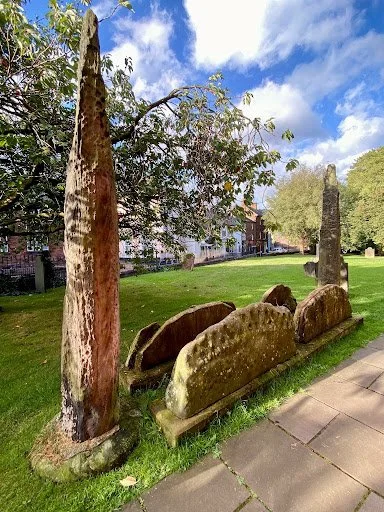
St Andrew’s Churchyard in central Penrith contains remarkable evidence of the early medieval period.
The Giant’s Grave consists of two 10th-century stone cross-shafts and four distinctive hogback stones — carved grave markers with sloping sides, associated particularly with Scandinavian-influenced communities in northern England. Local tradition associates the Giant’s Grave with Owain, a 10th-century ruler of Strathclyde who may have attended the meeting with Æthelstan at Eamont in 927.
Nearby stands the Giant’s Thumb, an early medieval high cross probably dating to the 10th century.
On the other side of the church from the Giant’s Grave and Giant’s Thumb is Café4Eden, in St Andrew’s Parish Centre. It serves coffee, cakes and lunch, with proceeds supporting 4Eden, the local charity supported by this guide. Please do pop in!
4. Medieval England: Church, Market and Border (1066–1455)
The Norman Conquest of 1066 transformed England, although Norman control of the far north-west came later. The area that became Cumberland was not included in the Domesday Book of 1086, and it was only in 1092 that William II seized Carlisle and extended Norman power into the region. Over the following centuries, England developed an increasingly recognisable system of monarchy, law, church and local government. Towns grew around churches and markets, connecting the surrounding countryside to a wider economy. Penrith became one of them.
At its heart stood St Andrew’s Church. A church had occupied the site for centuries, and parts of the tower that survive today date from the 12th and 13th centuries.
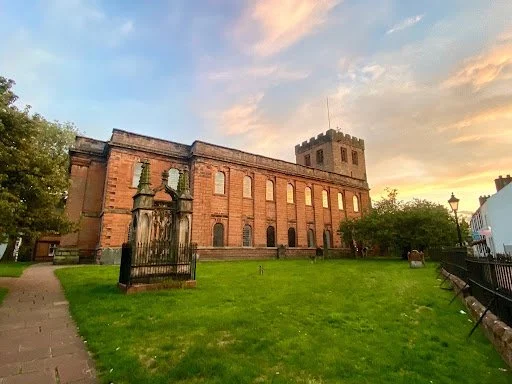
In 1222, Penrith was granted a royal charter to hold a market and fair. Long, narrow properties known as burgage plots ran back from the main streets, with houses and shops at the front and space behind for workshops, stores, gardens and other activities. Over centuries, many were divided and adapted, helping to create the network of yards and narrow passages that remains one of Penrith’s most distinctive features. We will return to the yards in Chapter 9.
Weaving and dyeing were recorded by 1310, with tanning recorded from 1379. Produce from the fertile Eden Valley flowed into the town to be bought, sold and processed.
Water helped the town grow too. By the late 14th century, water from the River Petteril had been diverted into Thacka Beck to supply Penrith, a development traditionally associated with William Strickland, later Bishop of Carlisle.
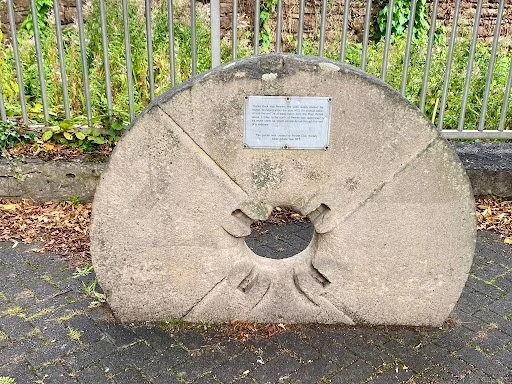
Today, Thacka Beck flows largely underground through Penrith, but it can still be seen behind Penrith and Eden Museum on Middlegate. Beside the beck there is an old millstone, recalling the tradition that the amount of water diverted from the River Petteril was limited to what could pass through the hole at its centre.
The 14th century also brought the Black Death, which killed a large share of England’s population and profoundly disrupted communities and the economy.
Penrith’s location brought other danger as well. Its position on important routes through the Eden Valley placed it close to a frequently contested border between England and Scotland. Armies crossed the region and raiders operated on both sides.
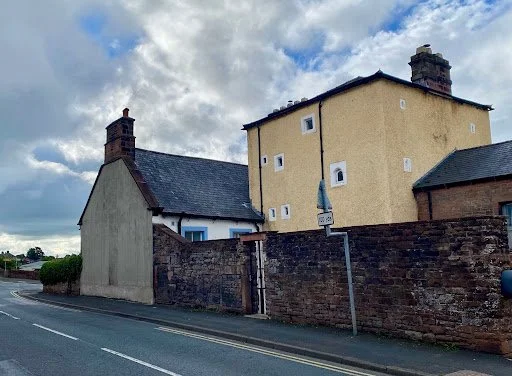
That insecurity can still be seen in the town. On Friargate, Hutton Hall incorporates a 14th-century pele tower behind its later façade. Pele towers were fortified stone buildings constructed across the border country to provide protection in a region repeatedly affected by raids and warfare.
Where History Happened: Penrith Beacon, Beacon Hill
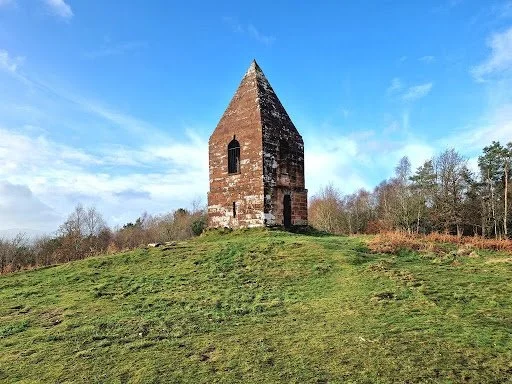
Photo: Penrith Beacon, copyright Adam Kerr and licensed for reuse under a cc-by-sa/2.0 Creative Commons Licence.
High above the town, on Beacon Hill to the north-east, Penrith Beacon was part of a network of beacons used to warn of approaching danger. A fire lit here could warn communities that danger was approaching through the Eden Valley.
A beacon is thought to have existed on the hill from at least 1296, and by 1468 it was recorded as part of a chain communicating with neighbouring beacons. The stone tower visible today is much later, built in 1719 on the site of earlier beacons. But the warning system it represents had medieval origins and would remain important for centuries.
5. Wars of the Roses: Richard III’s Penrith (1455–1485)
During the 15th century, England was shaken by a series of struggles for the throne known as the Wars of the Roses, fought between rival branches of the Plantagenet royal family. The House of Lancaster became associated with the red rose and the House of York with the white.
The conflict began during the troubled reign of the Lancastrian Henry VI. In 1461, the Yorkists defeated the Lancastrians and Edward IV took the throne, supported by Richard Neville, Earl of Warwick — the famous “Kingmaker” — whose family held Penrith.
But Warwick later turned against Edward and helped restore Henry VI. Edward returned from exile in 1471 with his younger brother Richard, Duke of Gloucester. Warwick was killed at the Battle of Barnet, and Edward regained the throne.
After Warwick’s death, Penrith came into Richard’s hands. He married Warwick’s daughter Anne Neville and, as Warden of the West March, became a powerful figure in northern England, responsible for defending the Scottish border and exercising royal authority across the region.
Where History Happened: Penrith Castle, Ullswater Road
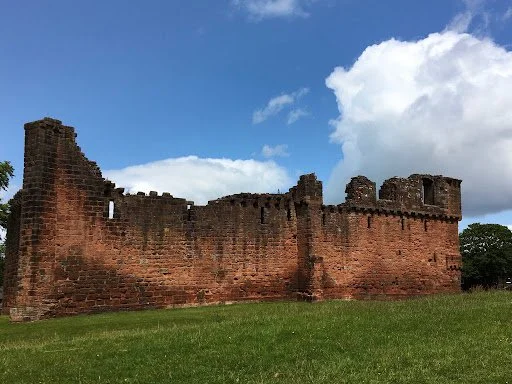
Penrith Castle was begun by the Neville family towards the end of the 14th century, partly in response to the threat from Scotland and as a symbol of Neville power in the region. After taking control in 1471, Richard, Duke of Gloucester, improved the castle, creating more comfortable accommodation and developing it as a residence and administrative centre.
For periods between 1471 and 1483, one of the most powerful men in England was therefore living and governing from Penrith.
When Edward IV died unexpectedly in 1483, his twelve-year-old son became Edward V, with Richard appointed Protector. Within months, Edward and his younger brother were declared illegitimate and Richard took the throne as Richard III. The two boys — the Princes in the Tower — subsequently disappeared.
Richard’s reign lasted just over two years. In 1485, he was defeated and killed by Henry Tudor at the Battle of Bosworth Field, bringing an end to the Plantagenet dynasty and making way for the Tudors. (In 2012, Richard III’s story captivated the world all over again when his remains were discovered under a council car park in Leicester.)
Henry Tudor became Henry VII and founded the Tudor dynasty. His marriage to Elizabeth of York, Edward IV’s daughter, helped reconcile the rival claims of Lancaster and York.
Penrith Castle never again enjoyed the prominence it had under Richard. Its ruins are a reminder that this Cumbrian market town was once a base of the man who became England’s last Plantagenet king.
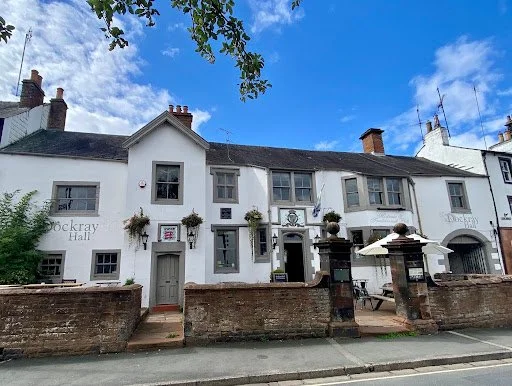
Dockray Hall, on Great Dockray, dating partly from around 1470, has a longstanding tradition that Richard stayed there while work was being carried out at Penrith Castle. Above the entrance, royal arms are flanked by two white boars, Richard’s personal emblem.
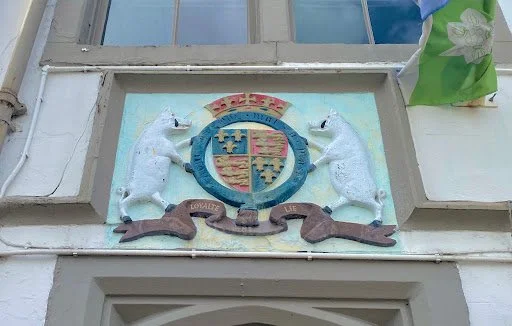
Today Dockray Hall is a lovely pub and an enjoyable place in Penrith to contemplate the Wars of the Roses over a drink!
6. Tudor England: Reformation, Education and Plague (1485–1603)
The Tudor period transformed England. Henry VIII broke with Rome, monasteries and other Catholic institutions were dissolved, and under Elizabeth I Protestantism became more firmly established. Education and literacy expanded, while government became increasingly centralised.
Penrith preserves traces of these changes within a few streets around St Andrew’s Church. Grammar teaching was recorded here as early as 1340, and in 1395 Bishop William Strickland established a chantry whose priest taught music and grammar. The Reformation brought this religious foundation to an end when the chantry was dissolved in 1547.
In 1564, Elizabeth I endowed a Free Grammar School, situated in St Andrew’s churchyard and Bishops Yard. It was the ancestor of today’s Queen Elizabeth Grammar School. The old school was demolished and replaced in 1857 by the Gothic building that stands on the site today, now home to Penrith Library.
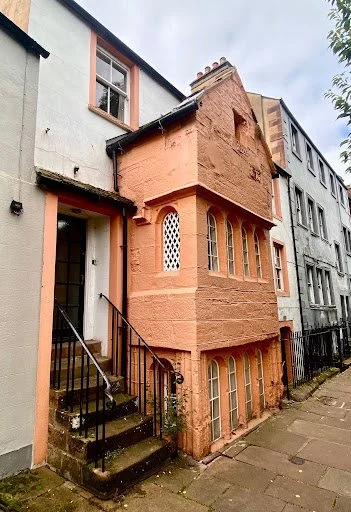
Nearby stands one of Penrith’s oldest surviving houses. Built in 1563 for the local draper Robert Bartram, it later became Dame Birkett’s School, attended by the young William and Dorothy Wordsworth, as well as Mary Hutchinson, William’s future wife. We will meet them again in Chapter 10.
Where History Happened: The Plague Stone, Bridge Lane
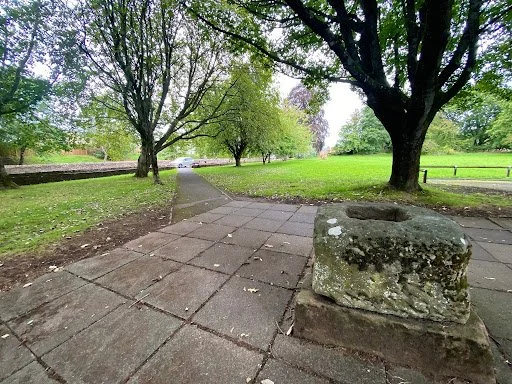
Tudor England remained vulnerable to something its rulers could do little to control: disease.
In 1597–98, plague devastated Penrith. Around 600 people are estimated to have died — perhaps two-fifths of the town’s population.
Normal life was severely disrupted. Families were devastated and contact between the town and surrounding countryside became dangerous. People responded with the limited tools available to them: restricting contact while finding ways for essential exchange to continue.
Near the southern approach to Penrith stood a stone with a hollow in its top. According to local tradition, during the plague it was used for exchanging coins between townspeople and people from the surrounding countryside, allowing trade to continue while reducing direct contact. The hollow is said to have been filled with vinegar, then believed to help prevent the spread of infection. The Plague Stone survives today beside the path between Bridge Lane and Tynefield Drive.
The scale of the disaster can also be traced in the landscape. As the churchyard filled, new burial pits were dug at an area known as Plague Lonnin, between today’s Wordsworth Street and Graham Street.
Further hardship followed. A generation later, a poor harvest in 1622 contributed to severe famine in 1623, bringing another sharp rise in deaths.
7. Stuart England: Civil War, Revolution and Religious Change (1603–1700)
When Elizabeth I died without a direct heir in 1603, the Tudor dynasty ended. The crown passed to James VI of Scotland, the great-great-grandson of Henry VII and Elizabeth’s closest viable Protestant successor. He became James I of England, bringing the crowns of England and Scotland under the same monarch.
The 17th century transformed England’s monarchy, Parliament and religious life. Disputes between James I’s son Charles I and Parliament over political and religious authority eventually erupted into civil war in 1642, dividing the country between Royalists supporting the King and Parliamentarians opposing him.
Penrith’s position between England and Scotland again placed it close to events. The first Civil War ended with Charles I’s defeat in 1646, but fighting resumed in 1648 after the King reached an agreement with Scottish supporters, beginning what became known as the Second Civil War.
A Scottish Royalist army crossed the border and marched south. Parliamentarian commander Major-General John Lambert based his forces at Penrith Castle, with troops quartered in the town. As the Scots advanced, Lambert withdrew south before joining forces with Oliver Cromwell. Together their forces defeated the much larger Scottish-Royalist army at the Battle of Preston in August 1648. During the campaign, Penrith Castle was deliberately made indefensible to prevent its use by the enemy.
The defeat helped seal Charles I’s fate. In 1649 he was tried and executed, the monarchy was abolished and England became a republic. The monarchy was eventually restored under his son Charles II in 1660, but arguments about religion and political authority were far from over.
The upheavals also saw new religious movements. Among them were the Quakers, or Religious Society of Friends, who emerged in the 1650s through the preaching of George Fox and others. Cumbria became one of the movement’s most important early centres. Quakers believed that everyone could experience God directly through the ‘Inner Light’, challenging the authority of ordained clergy and the established Church. Their refusal to conform to established religious practices led to considerable persecution.
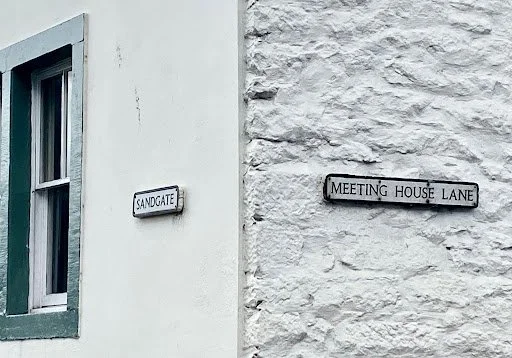
Where History Happened: Penrith Quaker Meeting House, Meeting House Lane
Quakers initially met in private houses around Penrith and nearby Clifton. Their position changed following another political revolution.
James II succeeded his older brother Charles II. His own Catholic faith, attempts to increase toleration for Catholics, and fears that he was undermining Parliament and the Protestant establishment provoked growing opposition. When a son was born to James in 1688, the prospect of a lasting Catholic dynasty intensified those fears. Leading opponents invited the Protestant William of Orange, husband of James’s Protestant daughter Mary, to intervene. James fled to France, and Parliament offered the crown to William and Mary in what became known as the Glorious Revolution.
The following year, the Toleration Act of 1689 gave many Protestant dissenters greater freedom to worship legally outside the Church of England, although important restrictions remained.
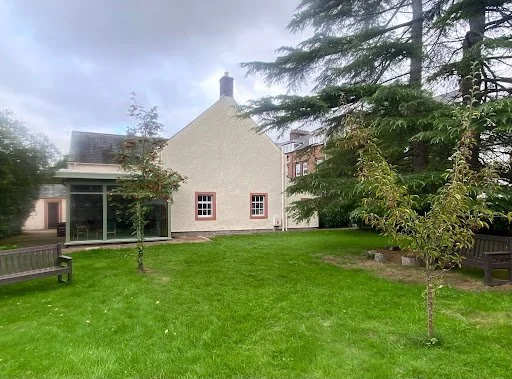
In 1699, Penrith’s Quakers bought Layne House, a 17th-century farmhouse on what is now Meeting House Lane. It became their permanent meeting house, with an adjoining burial ground. The building was altered during the 18th century and enlarged in 1803, giving it much of its present appearance. It remains a Quaker meeting house today.
The removal of James II did not settle the question of who should rule. His supporters — the Jacobites — continued to believe that he and his descendants were the rightful monarchs. Their attempts to restore the Stuart line would bring armies through Penrith again.
8. The Making of Great Britain: Union and Jacobite Rebellion (1688–1760)
The Glorious Revolution of 1688 had removed James II from the throne, but his supporters — known as Jacobites, from Jacobus, the Latin form of James — continued to believe that he and his descendants were the rightful monarchs.
Meanwhile, the state itself was changing. In 1707, the Acts of Union united England and Scotland within the new Kingdom of Great Britain, with a single Parliament at Westminster.
From 1714, Britain was ruled by the Hanoverian dynasty, beginning with George I and followed by George II. This was the beginning of the Georgian era, a period in which Britain grew in commercial wealth and power, expanding its overseas empire and its involvement in the Atlantic slave economy, while Parliament and government grew in importance alongside the monarchy.
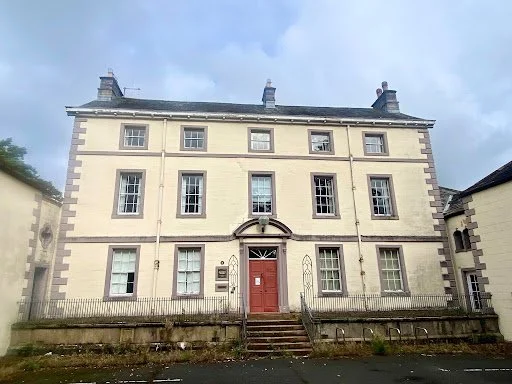
Penrith was changing too. Its markets and position on the main route between England and Scotland brought trade and travellers through the town. Prosperity can still be seen in some of the Georgian houses around the town centre, including Mansion House, built around 1750.
But Penrith’s position on the road from Scotland could also make it dangerously exposed. In 1715, an army supporting James II’s son marched through Penrith before being defeated at Preston. Thirty years later, the Jacobites returned.
In 1745, James II’s grandson Charles Edward Stuart — Bonnie Prince Charlie — sailed from France and landed in the Scottish Hebrides. After reaching the mainland, he raised the Jacobite standard at Glenfinnan and gathered an army. Following victory over government forces at Prestonpans, the Jacobites crossed the border into England.
Penrith stood directly in their path. The army entered the town in November 1745. Local tradition preserves colourful memories of Highland soldiers appearing in Penrith’s streets, including the story of one helping himself to a steaming pot from a bakehouse.
Once again Penrith Beacon, which we introduced in Chapter 4, became part of the town’s warning system during the last great Jacobite attempt to overthrow the government.
Where History Happened: The George Hotel
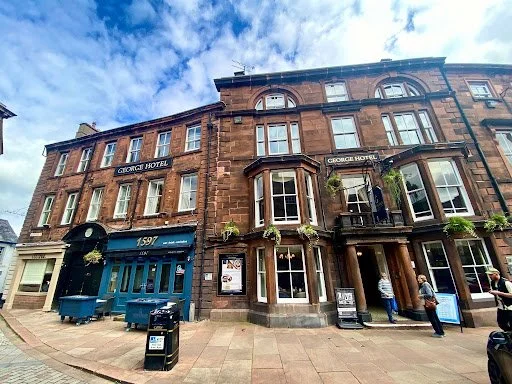
On 22 November 1745, Bonnie Prince Charlie stayed at The George Hotel in the centre of Penrith as the Jacobite army marched south.
The army continued through England, eventually reaching Derby, just 120 miles from London. But with government forces gathering and the support they had hoped to attract in England failing to materialise, the Jacobite commanders decided to retreat.
In December 1745, fighting took place at Clifton Moor, immediately south of Penrith, as government forces pursued the retreating Jacobites. Often described as the last battle fought on English soil, it was more accurately a fierce skirmish or series of clashes. The Jacobites continued north, but their campaign ended decisively at Culloden in Scotland in April 1746.
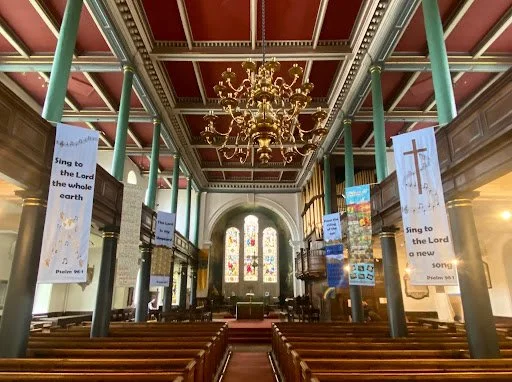
Penrith retains a reminder of the crisis inside St Andrew’s Church. Its great brass chandeliers were purchased in 1746 with money given by the Duke of Portland to reward the townspeople for their actions against the Jacobites. They still hang in the church today.
After 1745, Jacobitism ceased to pose a serious military threat. The Hanoverian monarchy and the new British state were increasingly secure, while Penrith could continue its development from vulnerable border town into prosperous Georgian market town.
The George remains a hotel today. So, if you have time, stop for a coffee or cream tea. You will be doing so where Bonnie Prince Charlie stayed during the last Jacobite invasion of England.
9. Agricultural and Industrial Revolutions: A Changing Economy (c. 1760–1830)
During the 18th and early 19th centuries, England’s economy changed dramatically. New farming methods and machinery transformed agriculture, while mechanisation revolutionised manufacturing and industrial towns expanded at extraordinary speed. Britain’s overseas empire and global trade also expanded, bringing enormous wealth while remaining deeply connected to slavery and colonial exploitation.
Penrith’s economy remained closely connected to the fertile Eden Valley. Farmers brought produce and livestock into town; merchants bought and sold it; and tradespeople provided goods and services to the surrounding rural economy. Cornmarket dealt in grain, Great Dockray became associated with livestock and Sandgate with butter and eggs.
Better roads connected Penrith to the changing national economy. Turnpike roads (funded through tolls) improved travel, and in 1763 the first public stagecoach service crossed Shap. Penrith produced textiles including checks, linen and ginghams, alongside trades such as brewing, tanning, shoemaking and clockmaking. But as mechanised manufacturing became concentrated in the new industrial towns, Penrith’s smaller-scale industries struggled to compete. The town adapted rather than becoming a major factory centre, with agriculture, markets, services and smaller industries remaining central to its economy.
Penrith’s distinctive yards played a role in this economy. Their origins lay in the long, narrow medieval burgage plots we encountered in Chapter 4. Buildings fronted the main streets, while workshops, stores, stables and homes occupied the land behind them, reached through narrow passages from the street. As the town’s population grew, more dwellings and workshops were packed into these spaces.
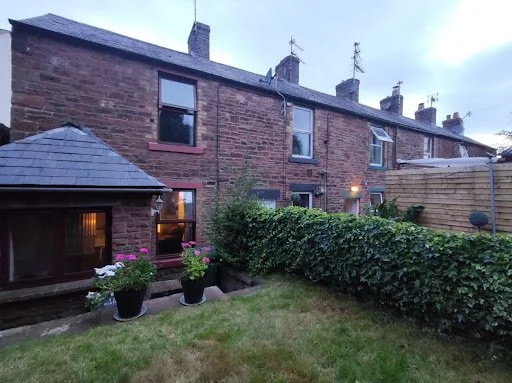
The story of Welsh Yard, behind Sandgate, illustrates how this pattern continued into the Victorian period. In 1851, James Welsh and his 13-year-old son were working as lead miners. James later became the beer-house keeper of the Odd Fellows’ Arms on Sandgate, with the yard behind recorded as Welsh Yard by 1871. After his death, the next publican renamed the pub the Druids Hotel, but the yard kept Welsh’s name. By 1881, nine households comprising 49 people were living there, and in 1901 some large families occupied only three rooms. Six cottages survive today.
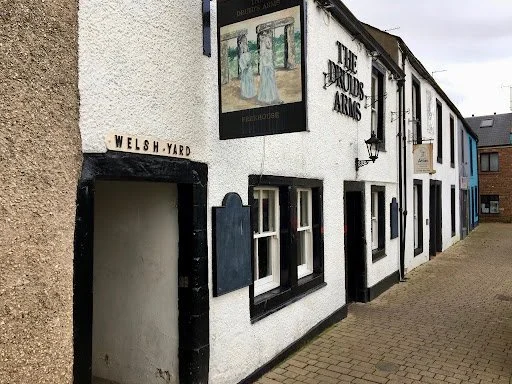
The pub survives too, now the Druids Arms, with the entrance to Welsh Yard alongside it. You can expect a warm welcome, whether stopping for a drink, a game of pool or darts, or one of its regular music nights. Nearby on Sandgate are the Sandgate Chippy, for excellent fish and chips, and the Foundry Hotel and Restaurant, for really lovely food.
Penrith was also connected to events far beyond England. Across the British Empire and its former American colonies, this was an age of expansion, revolution and profound political change.
Thomas “Scotch Tom” Nelson, born in Penrith in 1677, emigrated to Virginia. His grandson, Thomas Nelson Jr, became a signer of the American Declaration of Independence and a leading figure in the American victory against the British at Yorktown in 1781. The Nelson family also accumulated wealth through trade and the ownership of enslaved people in Virginia, reflecting the contradictions of an age of revolution and slavery.
Britain’s growing wealth and global power were also deeply entangled with the transatlantic slave trade. At the same time, a growing movement in Britain and beyond was campaigning for abolition. Penrith has a connection to that campaign too.
Where History Happened: Brougham Hall, Brougham
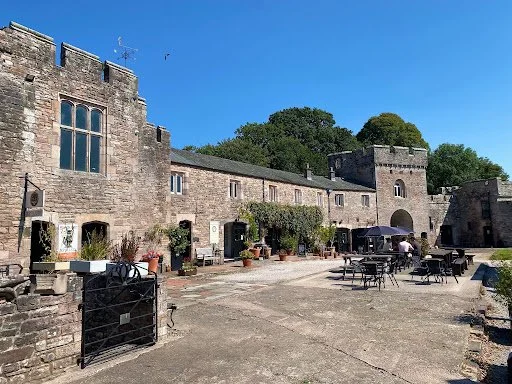
A few miles outside Penrith, Brougham Hall was the family home of Henry Brougham, born in 1778, who became a prominent lawyer, politician and abolitionist.
Brougham became one of the leading reforming politicians of his generation, campaigning on issues including education, law reform and the abolition of slavery. In 1811, he introduced legislation that made participation in the slave trade a criminal offence, strengthening Britain’s 1807 ban on the trade. He later served as Lord Chancellor and helped secure the passage of legislation in 1833 to abolish slavery across most of the British Empire.
The abolition of slavery resulted from a much wider struggle, including resistance by enslaved people, Black abolitionists and a mass abolitionist movement in Britain and beyond. Brougham Hall nevertheless provides a tangible local connection to one of the defining struggles of the age.
As mentioned in Chapter 2, Brougham Hall today houses art and ceramics studios, a distillery and a lovely café in the central courtyard. We will return to it once more in Chapter 12.
10. Romantic England: Wordsworth and the Lake District (c. 1770–1840)
As industrial change transformed England, writers and artists in the Romantic Movement responded by placing new emphasis on imagination, emotion and the natural world. Mountains and wild landscapes, once regarded as dangerous, remote or unproductive, became places to admire and visit.
Few writers became more closely associated with this changing relationship with landscape than William Wordsworth, who had strong childhood and family connections with Penrith.
Wordsworth’s lifetime coincided with a dramatic change in the reputation of the Lake District. By the late 18th century, guidebooks, paintings and travel writing were encouraging visitors to seek out its mountains, valleys and lakes. War and revolution on the Continent made European travel more difficult, encouraging wealthy British travellers to explore landscapes closer to home.
Penrith benefited from this new interest. Its location on the main route north and close to the north-eastern Lakes made it a natural stopping point for travellers. The market town that had prospered by serving its agricultural hinterland was also acquiring another role: a gateway to a landscape that Romanticism was helping turn into one of England’s most celebrated destinations.
In his 1787 Survey of the Lakes, James Clarke observed:
“Those, likewise, whom a taste of natural beauties impels them to visit the Lakes, always consider Penrith as a kind of home in those solitary regions.”
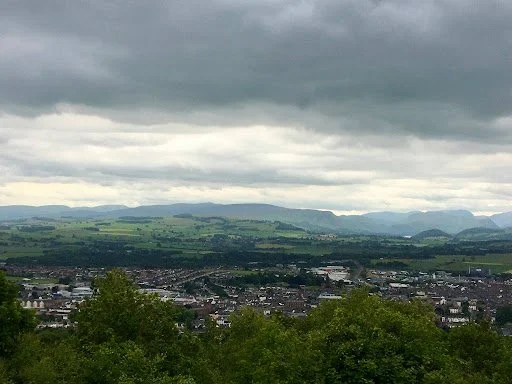
Photo: The view from Penrith Beacon over Penrith towards the Lake District fells
Where History Happened: Wordsworth’s Penrith
“O’er paths and fields
In all that neighbourhood, through narrow lanes
Of eglantine, and through the shady woods,
And o’er the Border Beacon, and the waste
Of naked pools, and common crags that lay
Exposed on the bare fell, were scattered love,
The spirit of pleasure, and youth’s golden gleam.”
— William Wordsworth, The Prelude, Book VI (1850)
Although William Wordsworth was born in Cockermouth in 1770, Penrith played an important part in his childhood. His mother, Ann Cookson, came from the town, and William and his sister Dorothy stayed with their maternal grandparents at their house on the site of the former Arnison’s department store on Devonshire Street. Their parents had married at St Andrew’s Church in 1766, and the family retained strong connections to the town.
As mentioned in Chapter 6, William and Dorothy attended Dame Birkett’s School in St Andrew’s Place. Another pupil was Mary Hutchinson, whom William would marry in 1802. Wordsworth remembered Penrith in his poetry, recalling childhood experiences around Beacon Hill in The Prelude.
Other family connections remain around the town. One of the houses built in 1791 that later became Penrith Town Hall was occupied for many years by Wordsworth’s cousin John Wordsworth, helping give them the name Wordsworth Buildings. We will return to the Town Hall in Chapter 14.
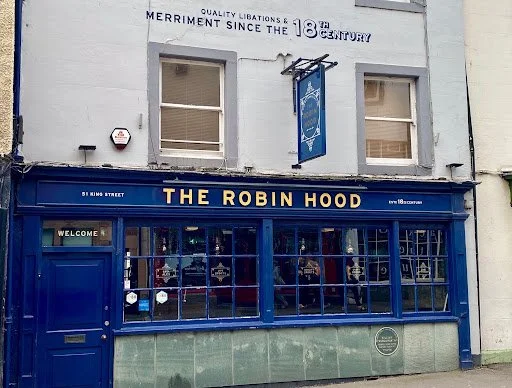
Perhaps the most consequential Penrith episode in Wordsworth’s early life, however, took place at what is now the friendly Robin Hood Inn on King Street. In late 1794 and early 1795, Wordsworth spent weeks nursing his close friend Raisley Calvert, who was dying of tuberculosis. Calvert left him £900 in his will, a substantial legacy that gave the young Wordsworth greater financial independence and meant that he could devote himself to poetry.
Next door to the Robin Hood is Fell Bar, a welcoming and inclusive craft beer pub with an excellent selection of beers and organic wines. On the opposite side of King Street is NEAUM, highly recommended for a flat white!
11. Victorian England: Railways, Reform and the Modern Town (1837–1901)
Victorian England was transformed by industrialisation, rapid population growth and expanding towns and cities. Railways connected communities to national markets and made it possible for people, goods, newspapers and ideas to travel further and faster than ever before.
Penrith shared in these changes. Its population almost doubled from around 3,800 in 1801 to more than 7,000 by 1851, while the arrival of the railway in 1846 connected the town more closely to the rest of the country.
Growth brought new challenges. A Local Board of Health was established in 1851, and new water infrastructure followed. Across Victorian Britain, clean water, drainage, sanitation and public health were increasingly becoming responsibilities of local government.
Political participation was expanding too. Building on the Great Reform Act of 1832, further reforms in 1867 and 1884 greatly increased the number of men entitled to vote, although many remained excluded and women could not vote in parliamentary elections.
Victorian Penrith is very much visible today. The Musgrave Monument, a Gothic clock tower erected in 1861 in memory of Philip Musgrave of Edenhall, became one of the town’s most recognisable landmarks. New churches, schools, banks, shops, houses and civic buildings also appeared, leaving much of the town centre’s familiar Victorian character.
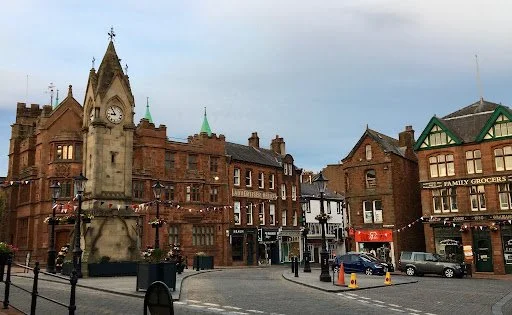
Alongside the Musgrave Monument is J&J Graham, a family grocer established in 1880 and still trading today. It is well worth a visit for its selection of local produce and Cumbrian hampers.
Nearby, look out for Tattie Tim, serving jacket potatoes from a traditional Victorian-style oven from Wednesday to Saturday lunchtimes. He has been feeding Penrith for around 30 years. Excellent potatoes and an equally excellent character. Highly recommended!
Where History Happened: Penrith Station, Ullswater Road
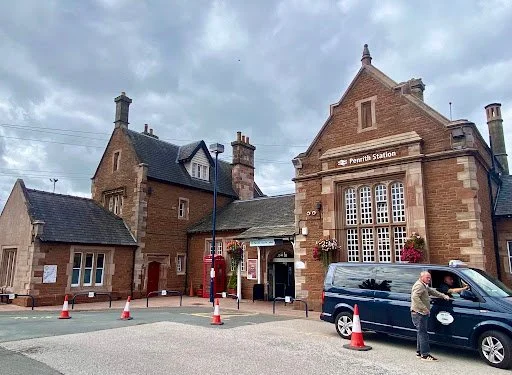
The railway reached Penrith in 1846. The station was designed by prominent railway architect Sir William Tite.
The railway transformed Penrith’s connections. Agricultural produce could reach distant markets more easily, while visitors could travel rapidly to Penrith by train before continuing towards Ullswater and the Lake District. The Romantic discovery of the Lakes explored in the previous chapter was developing into a much larger tourist industry.
Penrith’s connections expanded further when the Eden Valley Railway opened in 1862 and the Cockermouth, Keswick and Penrith Railway in 1865. Penrith had become part of a railway network stretching across Victorian Britain.
The station still stands opposite Penrith Castle, and trains continue to stop here on the West Coast Main Line. If you’re waiting for a train, the nearby Agricultural Hotel is a good place for a drink — and, in good weather, a seat outside and a view across to the castle.
Another reminder of Penrith’s railway history can be found on Thacka Lane, where a new plaque marks the site of the Mail Click, once used to transfer mailbags to and from moving trains. The last mail drop took place on 4 October 1971, marking the end of this method of exchanging mailbags from moving trains in Britain.
12. Twentieth-Century England: War, Votes for Women and the Home Front (1901–1945)
The first half of the 20th century brought two world wars, but also profound changes in everyday life. Women gained parliamentary voting rights, new housing expanded, cinemas and consumer culture transformed leisure, and the role of government in people’s lives grew.
The campaign for women’s suffrage reached Penrith in 1909. A local branch of the National Union of Women’s Suffrage Societies was founded, with May Lawrence of Newton Rigg as secretary. Penrith’s branch is a reminder that this national movement depended on organisation in towns and communities across the country. In 1918, almost all men over 21 gained the vote, while women over 30 who met certain qualifications were enfranchised for the first time. Equal voting rights for women and men followed in 1928.
Penrith experienced the First World War through the people who left to serve and those who remained behind. Local men joined the armed forces, including units associated with the town’s Drill Hall, while the names of those who died would later be recorded on the town’s war memorial.
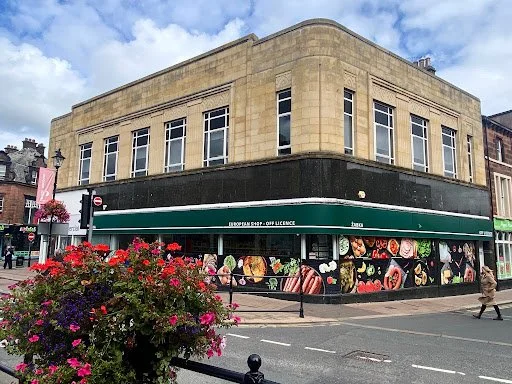
Between the wars, Penrith continued to change. Its first council housing appeared at Scumscaw, while new forms of entertainment and shopping reshaped the town centre. The Alhambra on Middlegate, opened in 1910 after being built as a roller-skating rink, theatre and public hall, became a cinema - it’s still going and is a wonderful place to catch a film. Nearby, the striking Art Deco Burton’s building, opened in 1937, reflected a more modern world of retail, fashion and consumer culture.
Behind the Art Deco building, on Queen Street, is Hem café, highly recommended for excellent coffee and cakes, and a very warm welcome.
The Second World War brought very different demands. Penrith received evacuees, while the surrounding countryside became an important centre for military training and secret wartime work.
We last encountered Brougham Hall in Chapter 9 as the family home of the reformer Henry Brougham. During the Second World War, it acquired a very different role. At Brougham Hall and nearby Lowther, hundreds of soldiers were involved in developing and testing the top-secret Canal Defence Light, a powerful searchlight mounted on an armoured vehicle intended to illuminate and disorient enemy positions during night attacks.
Winston Churchill visited Brougham Hall in connection with this secret wartime work. General Dwight D. Eisenhower, later President of the United States, also visited the area to see the equipment demonstrated.
In Penrith itself, the Town Hall became a centre for civil defence. On 8 May 1945, Churchill’s announcement of victory in Europe was relayed to people gathered outside. We will return to the Town Hall in our final chapter.
Where History Happened: The War Memorials, Castle Park
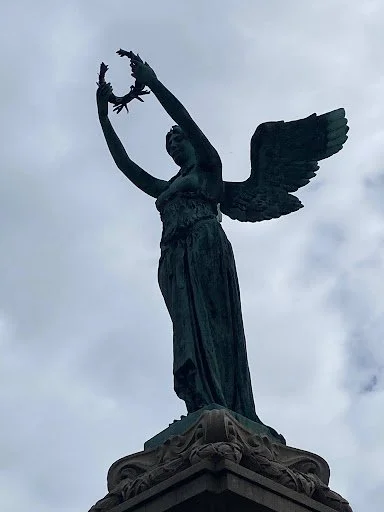
The memorials around Castle Park bring together several generations of Penrith’s experience of war.
The Black Angel commemorates local men who died in the South African War. Unveiled in Corney Square in 1906, it was moved to Castle Park in 1964.
Nearby, the War Memorial Gateway, facing Ullswater Road, was unveiled on 18 March 1923. Its bronze plaques record Penrith’s dead from the First World War, with the memorial rededicated in 1948 after the names of those killed in the Second World War were added.
The memorials form part of Castle Park itself, created in the early 1920s as the grounds around the castle were transformed into a public space for recreation and remembrance.
The two world wars profoundly changed British society. Women had taken on new roles, government had assumed greater responsibilities, and expectations of what the state should provide were changing.
13. Post-war England: Welfare, Prosperity and Mass Culture (1945–2000)
The decades after the Second World War transformed everyday life in England. The creation of the National Health Service, the expansion of the welfare state and a major programme of housebuilding reflected a new ambition to provide greater security and opportunity. Rising prosperity, car ownership, television and new consumer goods then changed how people lived, travelled, shopped and spent their leisure time.
Penrith shared in these changes. New housing expanded the town, while improvements in public services and living standards altered everyday life. The post-war years brought a growing expectation that a decent home, healthcare and education should be available to more people.
As car ownership increased, Penrith’s position on the route between England and Scotland, and as a gateway to the Lake District, took on new importance. The arrival of the M6 at Penrith in 1968 transformed long-distance travel, while the growing popularity of motoring made the Lakes more accessible to visitors. Walking became an increasingly popular leisure activity too, encouraged by publications such as Alfred Wainwright’s seven-volume Pictorial Guide to the Lakeland Fells, published between 1955 and 1966, whose hand-drawn guides helped generations discover the fells.
The high street was changing too. Supermarkets, national retailers and new consumer goods altered shopping habits, while television and advertising helped create a more recognisably national consumer culture. Penrith’s older streets continued to serve as places for shopping, work and social life, but they were adapting to a very different economy from the one that had shaped the Victorian town.
At the same time, the British Empire was being dismantled, while migration from the Commonwealth and elsewhere made England a more diverse society.
The later 20th century brought further economic and political change. Britain joined the European Economic Community in 1973, while the governments led by Margaret Thatcher from 1979 accelerated a shift towards a more market-based economy, including privatisation and the sale of council houses. Traditional industries declined in many parts of the country, while the service economy grew and patterns of work changed.
Where History Happened: Scaws Estate
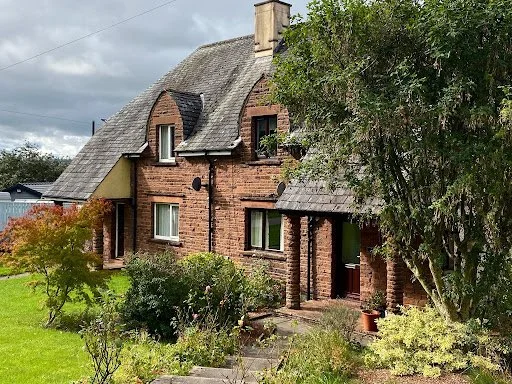
The Scaws Estate, begun in 1949, is a tangible reminder of one of the great ambitions of post-war Britain: to provide more people with decent homes and better living conditions.
Council housing was not new — as we saw at Scumscaw in the previous chapter — but after the Second World War it expanded on a much greater scale. Local authorities across the country built new estates to meet an acute housing shortage and replace overcrowded or inadequate homes. The aim was not simply to build more houses, but to provide modern family homes with more space, light and amenities.
At Penrith, Scaws was developed on what had previously been fields on the edge of the town. Its houses, gardens and green spaces created a markedly different environment from the densely packed yards and terraces we encountered in earlier chapters. What had been countryside became a new residential neighbourhood as post-war Penrith expanded outwards.
14. Twenty-First-Century England: The Digital Revolution and Looking to the Future (2000–Present)
The first quarter of the 21st century has brought another revolution in how people communicate. The spread of the internet, followed by social media and smartphones, has transformed how people work, shop, find information, consume news, maintain relationships and spend their leisure time. Now artificial intelligence may bring another period of rapid change.
These technologies have transformed English towns too. Online shopping and digital services have reduced the demand for some traditional shops, banks and other businesses, while the internet and social media have changed how local businesses, organisations and communities reach people. Penrith’s high street has had to adapt to this changing economy, while independent shops, cafés and pubs continue to play an important role in town life.
Penrith has continued to expand too, with new housing and the New Squares development, opened in 2013. The period has also been marked nationally by the UK’s departure from the European Union and the Covid-19 pandemic, both of which affected communities, businesses and public life across the country.
Another recent development has been a renewed push to devolve power from Westminster to England’s regions and communities. In 2026, the new Cumbria Combined Authority was established, with greater local powers and funding in areas including transport, housing, skills and economic development.
Where History Happened: Penrith Town Hall, Corney Square
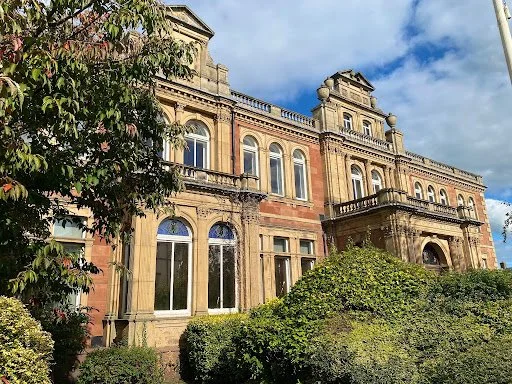
The Town Hall on Corney Square provides an appropriate place to finish this guide. Built as two houses in 1791, one was occupied for many years by John Wordsworth, a cousin of William Wordsworth, and they became known as the Wordsworth Buildings.
The buildings later became Penrith’s Town Hall and the centre of local government. As we saw in Chapter 12, during the Second World War it played a role in civil defence, and on VE Day in 1945 Churchill’s announcement of victory was relayed to people gathered outside.
Its role is changing again. Following the reorganisation of local government, council staff moved to the redeveloped Voreda House, and in 2026 plans progressed to transform the Town Hall into a community and creative hub, with proposed spaces for community activities, arts and performance, young people and digital skills.
The plans reflect a wider effort to rethink the role of town centres, as traditional shopping and public services change and new spaces are created for culture, learning and community life.
Just nearby, Eden Arts is a great place to discover and support local art, while Penrith and Eden Museum on Middlegate has interesting exhibitions and displays on the history of the town and wider region.
As Penrith and the surrounding area adapt, they continue to reflect the history of England, and who knows, will perhaps once again help shape it.

Photo: Graffiti art at Penrith Skate Park
Selected Sources and Further Reading
This guide draws on local history books, museum and heritage resources, and my own knowledge of Penrith. With thanks to the historians, researchers and volunteers whose work documenting and preserving the town’s history has made this guide possible.
Books and booklets
Ffinch, Michael. Portrait of Penrith and the East Fellside. Robert Hale, 1985.
Mitchell, Carol. Penrith: A Few Yards of Interest. Illustrated by Barbara Hitch, with additional paintings by Rosemary Koch-Osborne, 2025.
Stables, Andrew Graham. Secret Penrith. Amberley Publishing, 2016.
Historic Yards of Penrith: A Self-Guided Tour.
Penrith and Eden Museum. Living Among the Monuments. 2007.
Wordsworth, William. The Prelude, Book VI. 1850.
Articles
Explore Penrith – articles on Penrith’s history, buildings and people.
Cumbria County History Trust – historical accounts of Penrith and the surrounding area.
Museums and Heritage
Penrith and Eden Museum – local history, archaeological finds and exhibitions.
English Heritage – historical information on Penrith Castle, Brougham Castle and prehistoric monuments around Penrith.
Historic England – records of Penrith’s historic buildings and monuments.
Roman Inscriptions of Britain – online records of Roman inscriptions from sites around Penrith.
Guided Walks and Trails
Explore Penrith – self-guided heritage trail exploring the town’s buildings, streets and history.
Historic Yards of Penrith – self-guided tour exploring Penrith’s distinctive historic yards and passages.
Penrith Coronation Garden – outdoor historical timeline and interpretation panels exploring the town’s history.
Support people with learning disabilities in Penrith
If you enjoy this guide, please consider making a donation of £3, or whatever you can, to 4Eden, a charity supporting people with learning disabilities and additional learning needs in Penrith.